Day 5 is here!

My heart is calm. I have been patiently waiting for the call from the doctor to let us know how many of our little cells have turned into blastocysts and are ready for biopsy and being frozen.

I try not to read all the different experiences people share online of how many eggs retrieved, how many fertilized, how many make it to day 5 & 6, etc… but it’s hard not to look.

These last few days have felt deflating. In my mind, I have obtained a goal (of sorts), something I was focused on for many weeks, and now I just sit and wait.

My body is recovering, but still not back to normal. I continue to reheat the rice-hot pack in the microwave and melt into the couch.o-GIRL-WAITING-BY-PHONE-facebook.jpg

We receive a call, today is day 5. It’s nurse Christine calling to report 1 of our eggs have reached blastocyst stage so they have biopsied it and put it in the freezer (my heart drops… only 1).

The remaining 11 are still under observation and they will call us tomorrow with the final count.

Oh, my nerves!

I continue to trust in this process… the process I cannot control and have to simply accept.

The following is taken from Fertility Smarts to help explain the process:

On Day 5, embryos that have continued to grow to become blastocysts will have formed a fluid-filled cavity in the center of the embryo surrounded by a flat layer of cells called the trophectoderm (the part that makes the placenta). These embryos should also have a clump of cells called the inner cell mass (the part that makes the baby). Blastocyst embryos have a more complicated grading system based on 3 factors:

  1. The size of the embryo – based on the degree of expansion of the cavity (graded 2-6)
  2. Appearance of the inner cell mass cells (graded A-C)
  3. Appearance of the trophectoderm layer of cells (graded A-C)

Therefore an embryo with a grade of 4AA would be classed as a good quality embryo. Anything with a B grade is classed as average and a C grade would be quite poor quality.

Embryo grading is not an exact science and it just helps us to get an overall picture of the appearance of an embryo. Grading helps the embryologist to choose which embryo to transfer within your group of embryos.

Embryos with a higher grade are more likely to implant with the uterine lining, most likely because these embryos have a higher chance of being chromosomally normal. In other words, not all embryos are created equally and it is possible to select the genetically normal embryos that are more likely to grow.

What if my embryos have a poor grading?

Most people have a range of grades within their group of embryos from an IVF cycle and the embryologist will pick the best ones out of that particular group. We have seen babies born from different grades of embryos, so try not to focus on the numbers too much.

Although lower grade embryos have a less of a chance of implanting than their more handsome counterparts, it’s still possible to achieve a pregnancy from embryos that are not ideal when viewed under a microscope.

Try not to over analyze the exact grade of your embryos as we have seen babies born from all grades of viable embryos.

On Day 5 we know:

  • The number of embryos that have continued to grow and the quality of these embryos.
  • On average, only half of all Day 3 embryos will continue to grow to the blastocyst stage and the other half will stop growing after Day 3. Embryos usually stop growing because there is something wrong with their chromosomes. If an embryo stops growing in the lab it would most likely not have made a baby if we had transferred it.
  • Not all embryos grow at the same rate. Some will grow faster and be ready for transfer or freezing by Day 5 and some will need another day’s growth to get to an advanced stage. This is a normal growth pattern.
  • The best embryos are either transferred or frozen on Day 5 according to your clinic’s policy. In general, pregnancy rates are better when blastocyst stage embryos are transferred rather than Day 2-3 stage embryos.

Any embryos that are frozen are kept in the lab storage tanks until you need them. Any remaining slower growing embryos are kept in the lab overnight and there may or may not be more embryos to freeze Day 6.

Bio Lesson: Cells the Grow into Human

Here’s what will be happening with our little cells while we wait:

*Day 2 in the IVF Lab – Embryo Divides

On Day 2 the embryos start to divide and should have 2-4 cells. The embryo itself does not grow bigger; the single cell that was the fertilized egg divides to become 2 cells and then 4 cells with each cell being half the size of its predecessor.

They can start to see slight variations between the embryos in the group and they could be graded at this stage. Most clinics do not look at the embryos on this day but it is possible to do an embryo transfer or freeze the embryos if that is the clinic’s policy. It is usually better to wait as long as possible for transfer and freezing as this allows more diversity within the group and enables the embryologist to more easily select the best embryos. The splitting of cells to create identical twins happens on day 2 or 4.

Day 3 in the IVF Lab – Embryo Grading and Potential Transfer

On Day 3 the embryos should be around 8 cells. This is the day when some clinics move them into a new Petri dish with different media (solution to support growth) that is similar to uterine fluid for their next stage of growth. They grade the embryos but still do not know how many will continue to grow to the blastocyst stage (Day 5 and 6).

Some clinics perform embryo transfers and freezing on Day 3 and some clinics wait until Day 5. This depends on the number and quality of embryos that you have available and also the clinic policy. From what I understand, Shady Grove does not touch the cells until day 5 to let them grow in a healthy, untouched environment.

On Day 3 we know:

  • How many cells the embryos have
  • If the embryos are of good appearance up to this point
  • An average of 95% of fertilized eggs will grow to the Day 3 stage
  • The appearance on Day 3 does not tell us how many embryos will continue to grow

Day 4 in the IVF Lab – From Cleavage Stage to Blastocyst

Day 4 is a transformation day where the embryos are in between the cleavage stage and blastocyst stage.

What is a blastocyst?

  • A blastocyst is a fertilized egg that has developed for five to six days and contains 3 distinct features. These features include a fluid-filled cavity and two distinct types of cells:
    • Trophectoderm (T) cells – T cells consist of a single layer of cells around the circumference of the embryo that become the placenta and embryonic sac.
    • Inner cell mass (ICM) – The ICM is a distinct clump of cells that form the actual baby

The clinic usually does not look at the embryos on this day, but if they did they would see that some of them would be making the transition from a multi-celled embryo with clear cell outlines to what is called a morula which is the stage before an embryo becomes a blastocyst. Sometimes embryos do not reach the morula stage until Day 5.

multicellular.jpg

*Information from Fertility Smarts

Today is a New Day 1

It hurts to move.

I woke up a couple time last night to visit the bathroom and relieve the pressure on my ovaries. My body is not happy with me.

I am grateful that I am giving myself good nutrients to heal and space for my body to repair itself.

With light spotting of blood, I’m reminded that the doctor pierced through my lining into my ovaries and it will be more than just getting the hormones out of my system.

At 2:30am, I am awake. WIDE awake.

I spend some time reading and praying, thinking and praying and around 4am I drift back asleep.

With a slow start to my morning, I give myself permission to hunch over and shuffle.

We wait for the call from Dr. O’Brien to know the progress of our little ones.

Today is day 1– Fertilization check day

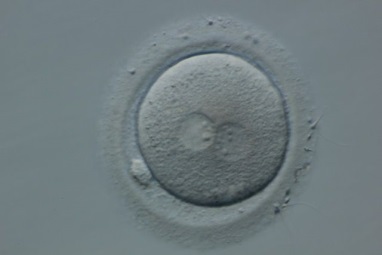
Approximately 16-20 hours after the insemination process takes place the embryologist will check to see if fertilization has occurred. The embryologist is looking for evidence of 2 nuclei (pn) – one from the egg and one from the sperm. This is how the embryologist determines if normal fertilization has occurred. Any more or any fewer nuclei present and the embryo is considered abnormally fertilized and is not kept in culture. Once normally fertilized, the embryos are placed back into the incubator and are not disturbed until day 3. The embryos are grown in a specially designed culture dish which contains a small drop of culture medium overlaid with oil. 2pn.jpg

This embryo culture medium contains the proteins, amino acids, and enzymes that mimic the fluid found in the fallopian tubes essential for embryo development. One factor (of many) that contributes to successful embryo development is the constant maintenance of temperature and pH level of this embryo culture medium. The temperature and culture medium pH level is dependent upon the CO2 environment and the heat that is provided by the incubators. Since the embryos are grown in a very small drop of culture medium it does not take long for the temperature to drop and the pH level to change in that drop containing the embryo once the dish is removed from the incubator’s environment. Severe changes in the temperature and pH level of the culture medium can have potentially detrimental effects on the embryos. The embryologists are very protective of the embryos in the lab and this is the reason why the embryologists do not like to disturb the embryos too much and will not look at the embryos on a daily basis.*

We get a call from Dr. O’Brien around 9am, of the 20 eggs retrieved, 13 of them were mature. This is a little less than was expected but MORE than what we saw on the monitoring screen a few days ago (which was 8).

Of the 13 mature eggs, 12 of them were fertilized!!

Yippee! The statistic is that 75% of mature eggs will fertilize, we had a 92% fertilization rate!

This means we go into the next 4 days of waiting knowing we have 12 potentials for a baby (or babies) to grow.

Dr. O’Brien keeps my expectations low as she mentions it’s typical to have 1/3 or 1/2 of the eggs survive the next 4 days. She would expect for us to have 4-6 blastocysts on Day 5. Although she cannot see the future or know the strength of our little growing cells, I can trust in her experience and let 4-6 be a success.

Here’s to a weekend of waiting, healing, and praying!

*Information from Fertility Smarts

Egg Harvest Day!

Today is the day! We have been waiting a long time for this opportunity to come and here it is.

Since I will be going under anesthesia, I am not able to have anything for breakfast. So instead, I shower, pack my luggage, and we drive to the clinic around 10:15am for our 10:30am report time.

I am nervous. My stomach feels less bloated today and I fear that the trigger shot already forced ovulation to occur and my eggs flushed out of me.

Oh, the mind games I play.

We are quickly taken back to room 11 where I redress with my blue smock and booties. The bruised vein gets one more prick and the saline begins to drip into my body. It takes an hour before it’s my turn to go into the operating room. At 12 noon, I kiss Hubby goodbye and shuffle into the OR.

It’s cold and the bench I lay on is short, just long enough for my head and torso. I lift my legs into the leg rests and I feel the vulnerability overwhelm me. The nurse straps my legs into the rests and asks me to move down to practically hanging off the edge of the bench.

I mention the chill and Steve, my anesthesiologist, quickly responds with, “let me give you a hot totty to warm you up”. He hooks me up to the ‘goods’ and the nurse flips my blue gown up over my stomach. Complete vulnerability. Pure humiliation.

That was my last thought.

ivf.jpg

The IVF process is pretty amazing. We are still in the first part of it all as we need to get the eggs and put the sperm inside and then let the cells grow.

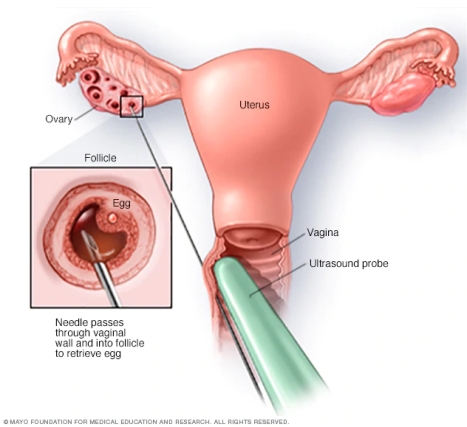
In order to get the eggs, they need to drain the liquid from the follicles. The eggs will come with the liquid into the doctors care. They will pierce the vagina wall and go through the ovaries. I am going into this procedure with just over 20 follicles (that were seen on the monitoring screen).

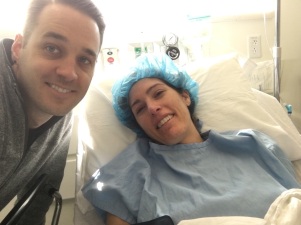
UNADJUSTEDNONRAW_thumb_8705.jpgI wake up about 12:45 in a drugged haze. I am in and out of coherent thought and I am crying. I’m so happy this part is over and so scared there were no eggs to retrieve. Hubby handles the blubbering sentiments and random thoughts like a champ. I even asked if Hubby could go into the OR and take a picture so we had a memory of it. (not an option).
 

Dr. O’Brien was by my side and shared they were able to harvest 20 eggs from my body!

Oh, what a joy! Great work body, I’m so grateful!

She was very pleased with the outcome and warned me of how sore I would feel. I could already feel the tenderness in my stomach.

Before I am released, I walk up and down the hall with a nurse. I can barely pull my legs out of bed before I feel a shooting pain up my bum.

I comment to the nurse and she says this is a normal pain as my ovaries are so enlarged. I get home and do some googling. This is what I find out:

It’s normal to feel this way since my ovaries were so enlarged that they could be pushing against my rectum.  Apparently, the more eggs they retrieve, the more uncomfortable you feel.  The reason is that they remove the eggs from the follicles, but the follicles still remain inside you and fill up with fluid after the retrieval, hence the bloating and my engorged ovaries.

Today is day 0Retrieval day

After I am released, 4-6 hours following the time of the egg retrieval the embryologist will initiate the fertilization process of the eggs. Fertilization is attempted using one of two methods, standard insemination or ICSI.

standard-insem.jpg

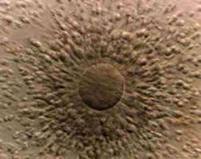
Standard insemination involves placing a required number of washed, motile sperm into the culture drop containing an egg. Although many may decide to do this, modern science has progressed to the ability to insert a single sperm into a single egg.


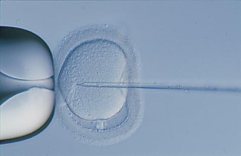
ICSI is a more involved process where the embryologist uses a specialized needle and microscope to catch a single sperm to inject directly into the cytoplasm of the mature egg.

ICSI.jpg

Once insemination or ICSI occurs the eggs are placed back into the incubator to allow time for fertilization to occur.

We decided to do the ICSI.


For the remainder of the evening, I rest and move gingerly, giving my body enough space to heal. We will learn more about how many of the 20 eggs were mature and fertilized tomorrow.


The Future Begins Tomorrow

Day 14- The final prick of my arm to see if the trigger medications worked. I check out of the clinic and am grateful to not need to make another monitoring appointment.

Nope, the next time I step into the clinic will be for egg ‘harvesting’.

I like that word better than retrieval. Time to gather all these wonderful, healthy, vibrant, abundant eggs!

My final acupuncture appointment focuses on balancing my body and rejuvenating my system. It’s time to love on my body and let the eggs release as they are supposed to.

I spend the rest of the day enjoying this process and relishing the growth of these wonderful follicles.

The sunshine greets us as we enjoy a brisk walk around our ‘home’. I feel as though I’m waddling and anxious to have this pressure released from my body.

Dr. O’Brien said the bloated feeling may last up to a week after the ‘harvest’ because of the trigger shots, but I’m hopeful my body will flush these toxins (is that what there are?) out of my system and I’ll be able to return to a normal body.

  • When will I be able to move without feeling this pressure?
  • When will I be able to work out my body again?

Only time will tell.

For today, I am focusing on giving my body good healthy nutrients.

I took the final medication tonight at dinner. It will be my last meal until after the ‘harvest’ tomorrow at noon.

I’m scared of what the ‘harvest’ will be like for my body.

  • What will the aftermath feel like?
  • Will I bleed?
  • How will I be able to walk?
  • What will the flight be like back home?

The only way to know these answers is to walk through this night… and tomorrow morning… and walk into the clinic at 10:30am and put my trust in the doctors…. And God.

See you on the other side!download.jpg